Pioneer Park Days is an annual event held the first week of March in Zolfo Springs, Florida at Pioneer Park, which is located at the intersection of US Highway 17 and State Road 64.
The most recent 43rd Annual Pioneer Park Days was billed as one of the largest and oldest antique tractor, steam engine and farm equipment shows in the Southeast. Over 400 exhibits and activities, including a daily antique tractor parade, basket weaving, toy making and wood burning, celebrated the 1800s.
In addition to the pioneer-themed activities, 450+ booths sold antiques, arts, crafts and flea market wares, numerous food booths were available throughout the park, and country and bluegrass music provided daily entertainment.
Showing posts with label history. Show all posts
Showing posts with label history. Show all posts
Friday, March 25, 2011
Saturday, March 5, 2011
Florida Flywheelers Antique Show
The Florida Flywheelers Antique Engine Club was founded in 1972 to promote the history and restoration of antique engines, autos and other antique devices. Flywheeler Park, located at 7000 Avon Park Cutoff Road, Fort Meade, Florida, was purchased in 1997 to showcase the 1,500+ member collections and preserve a part of history.

It has since grown to nearly 240 acres with multiple shows per year and includes a tractor pull track, club and member buildings, as well as, large engine collections.
The club advertises their shows as "wholesome fun for the whole family" with antique tractor displays, a steam-powered saw mill, an old engine ice cream maker, a pioneer village complete with cabins, barns, a church, a mercantile, blacksmith, schoolhouse, stores, stables, a jail, a firehouse, and gas stations, and miles of flea market items and carnival-style food.
 Events are held in January, February and November with a special Christmas in the Village in December. Visit Florida Flywheelers Antique Engine Club for the 2011 - 2012 schedule and more information.

It has since grown to nearly 240 acres with multiple shows per year and includes a tractor pull track, club and member buildings, as well as, large engine collections.
The club advertises their shows as "wholesome fun for the whole family" with antique tractor displays, a steam-powered saw mill, an old engine ice cream maker, a pioneer village complete with cabins, barns, a church, a mercantile, blacksmith, schoolhouse, stores, stables, a jail, a firehouse, and gas stations, and miles of flea market items and carnival-style food.

Friday, February 25, 2011
Myakka River State Park
 |
| Photo by Terry Lineberger |
 |
| Photo by Terry Lineberger |
Wildlife sightings may include alligators, manatees, turtles and wading birds, as well as bald eagles, ospreys, sandhill cranes and other shore birds depending upon the time of year you visit.
 |
| Photo by Terry Lineberger |
The Canopy Walkway was inspired by Dr. Margaret Lowman, a former director of Marie Selby Botanical Gardens, who saw Florida's forests as imperiled as many of the rainforests she studied and wanted to use the same methods to study and conserve Florida's ecosystems. It consists of a suspension bridge 85 feet long and 25 feet high and a tower reaching a height of 74 feet high.
 |
| Photo by Terry Lineberger |
A visitor center provides more information about the park and a concession is available for air boat rides, tram tours, canoe and kayak rentals, bike rentals, food, books and souvenirs. Picnic areas, two campgrounds, log cabins, playgrounds, ranger programs and special events are also on site.
The park is located nine miles east of I-75 at 13208 State Road 72, Sarasota, Florida and is open 365 days from 8:00 am until sunset with an entrance fee of $6.00 per vehicle for 2 to 8 persons.
Tuesday, February 15, 2011
Holocaust Boxcar


In addition to the Boxcar, the Museum has over 1,000 artifacts and photographs chronicling the rise of Nazism to the Allied Liberation and Nuremberg Trials, with many items donated by local survivors. The Museum is located at 4760 Tamiami Trail N in Naples, Florida and is open Tuesday through Sunday from 1 pm to 4 pm, except for holidays including the day after Thanksgiving. Admission is listed as $8 for adults and $3 for students ages 12-18. Due to the nature of the exhibits, student visits under the age of 12 are not recommended and require parent permission.
Please visit their web site for more information and may we, both individually and as a nation, never forget.
Saturday, February 5, 2011
Fort Myers River District
 |
| Atomic Clock - Centennial Park |
 |
| Edison Bridge Light |
Color-coded maps are available online and at local venues listing an eclectic mix of cultural and historical attractions, boutiques, entertainment, restaurants, retail shops and services. A self-guided tour to the free public art and parks is also available with monuments and landmarks described and numbered on a map, including the Uncommon Friends Fountain, with Thomas Edison, Henry Ford, Harvey Firestone and a few Florida natives, shown below.

Saturday, January 15, 2011
Goodbye Cypress Gardens
 Cypress Gardens opened in 1936 as Florida's first tourist attraction when Dick Pope, Sr and his wife showcased their botanical gardens. It became famous for its beautiful gardens, Southern Belles and water ski shows and was called the "Water Ski Capital of the World" because over 50 world water skiing records were broken there.
 Sadly, its demise, like many other original Florida tourist attractions, began in the 1970s when it had to compete with Disney. Once the Popes retired and transferred the park to their son, successive owners would unsuccessfully keep the park at the necessary attendance levels. The first owner outside the Pope family was book publisher, Harcourt, Brace, Jovanovich who bought the park in the early 1980s and operated it until it sold the park to Anheuser-Busch in 1989. A group of the park managers, led by Bill Reynolds, then bought the property in April 1995 from Anheuser-Busch and operated it until April 2003 when the park closed suddenly, putting 529 people out of work with three days' notice.
The Friends of Cypress Gardens, founded by Burma Davis Posey, immediately incorporated and saved the park by enlisting the help of members in the United States and 27 other countries and raising 13,500,000 dollars in three and a half months.
 This group then sold the property to The Trust for Public Land, a national conservation organization, who sold a conservation easement over the entire property to the state of Florida with the 30-acres gardens portion sold to Polk County.
Adventure Parks Group bought the balance of the property subject to the conservation easement and reopened the park as Cypress Gardens Adventure Park in November 2004 complete with a wooden roller coaster and other midway-style rides and the adjacent Splash Island water park followed in 2005. Unfortunately, the estimated $30 million in damages from the horrific 2004 hurricane season led Adventure Parks Group to file for bankruptcy in September 2006.

Land South Adventures bought Cypress Gardens at a bankruptcy auction October 16, 2007, temporarily closed the park in November 2008, then reopened in March 2009 as two separate parks.Splash Island was expanded but the animals and many of the midway rides were gone from Cypress Gardens. Sadly, on September 23, 2009, the company announced the park was closing because they were unable to "keep the park running in its traditional form."
Merlin Entertainments, the world's second largest them park and attraction operator, bought the park in 2010 and announced it would become Legoland Florida with an October 2011 opening. It has been reported that the gardens will be incorporated into the new park ... this Florida native and history lover certainly hopes so.
Monday, January 10, 2011
Disney's Hollywood Studios

This Disney theme park has an interesting history and began in 1985 when Disney and Metro-Goldwyn-Mayer (MGM) entered into a contract that gave Disney the rights to use the MGM name and logo for a back lot studio. Disney planned the theme park around a working production facilities for movies and television, as well as, a satellite animation studio. However, MGM filed a lawsuit in 1988 against Disney stating that it violated the original agreement. Thus, when the theme park opened adjacent to the production facilities as Disney-MGM Studios in 1989, the only connection to MGM was the original licensing agreement that allowed Disney to use the MGM brand name, lion logo and specific MGM content in The Great Movie Ride attraction. Disney later filed a counter suit and won the right to continue using the Disney-MGM Studios name on film product produced at the facility, but was prohibited from using the Disney-MGM Studios name in marketing pieces promoting it as part of the Walt Disney World Resorts.


Wednesday, November 10, 2010
Fort Denaud

Fort Denaud, located a few miles west of LaBelle, Florida, was established during the 1800s and has of one of the few remaining swing bridges left in Florida.


Saturday, September 18, 2010
Marie Selby Botanical Gardens

Distinct garden areas display a lush rain forest, koi pond, bamboo garden, banyan grove, cactus garden, a collection of Cyclades, and an outdoor butterfly garden.
 Visitors begin the journey through the conservatory and proceed through the plant displays.
 Bill and Marie Selby built the 2-story, Spanish style house (the first floor is now a cafe) on the property in the early 1920s where Marie began landscaping. Despite their wealth they lived a modest life in the small home and pursued outdoor activities instead of social gatherings.

Marie lived quietly in the home, after her husband's death in 1956, until her death in 1971. Her final wish to leave the property as a botanical garden was fulfilled in 1975 when the Marie Selby Botanical Gardens opened to the public.
 The gardens have since expanded to almost 13 acres and now include an elegant mansion that houses a museum, eight greenhouses, and the headquarters for The Bromeliad Identification Center, The Orchid Identification Center and the Selby Gardens' Herbarium. Thus, Selby Gardens is both a research/education center and a beautiful showplace.
Selby Gardens is located at 811 South Palm Avenue in Sarasota, Florida. It is open daily from 10 a.m. to 5 p.m., except Christmas. Admission is $17 for adults and $6 for children 6-11. Members enjoy free admission.
Wednesday, August 25, 2010
Sanibel Island
 People come from all over the world to enjoy the shell-rich beaches of Sanibel. What makes Sanibel Island ideal for shelling is the east-west orientation of the south end of the island. This natural land barrier easily captures shells from the swift moving waters. On the eastern tip of the island is the Lighthouse Beach and Fishing Pier. In addition to the historic functioning lighthouse and a fishing pier, the beach is one of the great places on the island to walk your dog.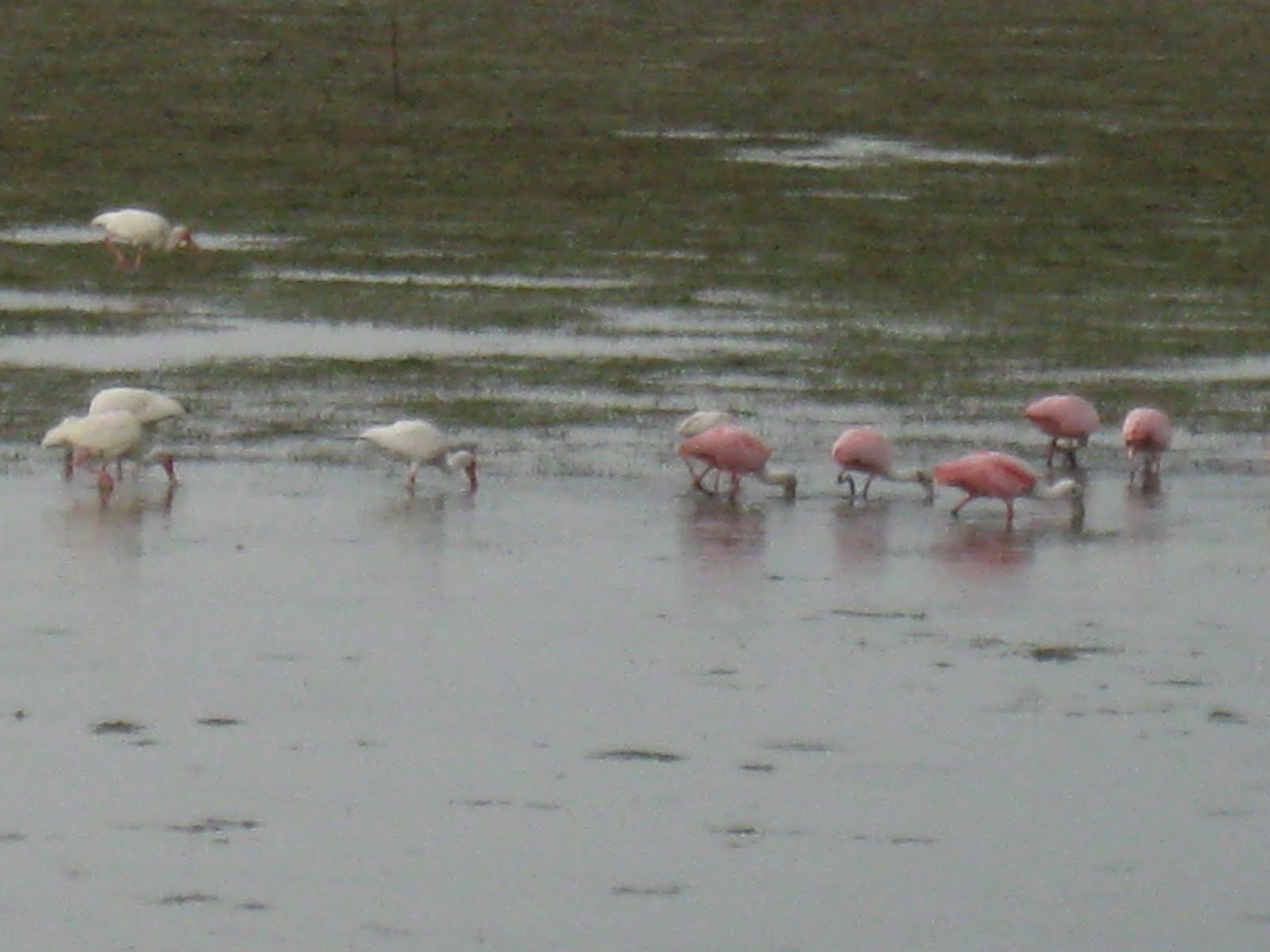
From the outer beaches to the interior sanctuaries, wildlife abounds on Sanibel. J.N. "Ding" Darling National Wildlife Refuge, named for Pulitzer Prize cartoonist and environmentalist Jay Norword Darling, is home to hundreds of birds, reptiles, and mammals. The four-mile drive provides spectacular up-close views of native vegetation and wildlife. One of the most popular activities during the leisurely drive is to stop and watch the roseate spoonbills with their bright pink feathers.
 Going to and from the island is an experience in itself. The Sanibel Causeway, rebuilt in 2007, has a six-dollar toll and a million dollar panoramic view. The Causeway is approximately three miles long with three bridge spans and two man-made islands and is home to frequent dolphin, pelican and seagull sightings.
Monday, July 5, 2010
Marjorie Kinnan Rawlings Historic State Park

This famous author moved to Cross Creek in 1928 where she lived in her cracker style home for 25 years and wrote The Yearling, a Pulitzer prize novel. Both her house and farm yard have been restored to the original period and designated as a National Historic Landmark in 2007. Additionally, the US Postal Service released a Rawlings commemorative stamp in 2008 and Florida's governor honored her as a First Floridian in March 2009.

 The farm yard is also maintained as it was in 1930s complete with chickens and ducks and a garden bearing seasonal flowers, fruits and vegetables while the citrus grove still yields its annual crop.
Two trails lead into surrounding woods where bald eagles, sand hill cranes and deer as well as smaller creatures make their home. The tenant house is tucked between the grove and woods and is a restored tenant house moved from the neighboring Brice family home. It resembles the original Rawlings tenant house where both black and white employees lived while they worked on her farm and in her grove.
History buffs, writers, as well as, nature lovers will truly appreciate this park.
Friday, June 25, 2010
Ravine Gardens State Park
Ravine Gardens State Park is located in Palatka where a ravine was formed by water flowing from the ridges of the St. Johns River over a period of thousands of years.

The gardens inside the park are the result of a joint effort of the City of Palatka, the Federal Works Progress Administration, and the Federal Civil Works Administration during the Great Depression. The park is one of nine New Deal-era state parks in Florida developed to help jump start economic recovery during the 1930s. Over 95,000 Azaleas were planted by 1934 and most of the original landscaping features - the main entrance, two suspension bridges, amphitheater, stoned terraces and columns, fountain and the Court of States - are still in place today.
 The Ravine Loop, a convenient paved road that winds around the ravine, provides bicyclists and motorists with a view of both the formal and natural gardens throughout the park and gives access to hiking trails, parking, picnic areas and a playground.
The park is most spectacular and alive with color January through April when the Azaleas, Chickasaw Plums, Dogwoods and Camellias are in bloom, but the dense vegetation abounds year round.

The gardens inside the park are the result of a joint effort of the City of Palatka, the Federal Works Progress Administration, and the Federal Civil Works Administration during the Great Depression. The park is one of nine New Deal-era state parks in Florida developed to help jump start economic recovery during the 1930s. Over 95,000 Azaleas were planted by 1934 and most of the original landscaping features - the main entrance, two suspension bridges, amphitheater, stoned terraces and columns, fountain and the Court of States - are still in place today.

The park is most spectacular and alive with color January through April when the Azaleas, Chickasaw Plums, Dogwoods and Camellias are in bloom, but the dense vegetation abounds year round.
Tuesday, June 15, 2010
Devil's Millhopper
Devil's Millhopper is an ancient sink hole located in Gainesville and is Florida's only geological state park.
 The name came about because fossilized bones were found at the bottom of the funnel-like or grist-mill-hopper shape. Hence, the idea that the mill hopper fed the ancient bodies to the devil and the sinkhole became known as Devil's Millhopper. An Indian legend says the devil kidnapped a beautiful Indian princess. When the Indian braves followed them, the devil made the sinkhole for the braves to fall into and when they tried to climb out the devil turned them into stone. Although both
 tales are great stories, the sinkhole was actually the result of a large underground cavern collapsing and is 500 feet across and 117 feet deep.
The water cascading down the limestone slopes sustains the dense vegetation and provides visitors with a glimpse of times past. Descending 232 steps to the bottom, the different layers of sediment represent different periods of time. At the bottom of the sinkhole some of the water spilling out of the springs above travel down to a natural "drain" leading to the Gulf of Mexico.
This is a unique park that nature lovers will definitely enjoy, especially when the sinkhole is in its Springtime colorful splendor. Just remember that going up 232 steps is a lot harder than going down and take plenty of water when the temperature is above 80 degrees.

 tales are great stories, the sinkhole was actually the result of a large underground cavern collapsing and is 500 feet across and 117 feet deep.
The water cascading down the limestone slopes sustains the dense vegetation and provides visitors with a glimpse of times past. Descending 232 steps to the bottom, the different layers of sediment represent different periods of time. At the bottom of the sinkhole some of the water spilling out of the springs above travel down to a natural "drain" leading to the Gulf of Mexico.
This is a unique park that nature lovers will definitely enjoy, especially when the sinkhole is in its Springtime colorful splendor. Just remember that going up 232 steps is a lot harder than going down and take plenty of water when the temperature is above 80 degrees.
Tuesday, June 1, 2010
Edison & Ford Winter Estates
After a recent visit to the Edison and Ford Winter Estates, it is easy to understand why it is one of the most popular historic home sites in the country.
 The first thing visitors see from the parking lot is a massive Banyan tree. Harvey Firestone gave this small tree to Thomas Edison in 1925 while they were working with Henry Ford to develop a source of natural rubber.
Behind the Banyan tree is the museum, gift shop, and botanic research laboratory. The museum holds some of Edison's inventions and Ford's automobiles, as well as, educational exhibits and videos. The lab is a step back in time and home to the original tools, equipment and machinery.
Across the street, lined with palm trees that Edison had brought in from Cuba, the estate homes, caretaker homes, gardens, swimming pool, pier, garages, and Edison's office have been restored to their original stature.

Behind the Banyan tree is the museum, gift shop, and botanic research laboratory. The museum holds some of Edison's inventions and Ford's automobiles, as well as, educational exhibits and videos. The lab is a step back in time and home to the original tools, equipment and machinery.
Across the street, lined with palm trees that Edison had brought in from Cuba, the estate homes, caretaker homes, gardens, swimming pool, pier, garages, and Edison's office have been restored to their original stature.
 Edison's vacation home, "Seminole Lodge", was completed in 1886. He used the estate as a winter retreat while working on his botanic research until his death in 1931.
 Henry Ford's vacation home, "The Mangoes", is located next door. Ford purchased it in 1916 and spent many winters there while also working with Edison on botanic research.
 Both residences take the visitor back to a bygone era with its sprawling porches and open-air buildings surrounded by acres of tropical greenery along the Caloosahatchee river.
 The Edison Ford Winter Estates offers something for both the history buff and the nature lover.
Monday, May 3, 2010
Smallwood Store
 Tucked away in the mist of the 10,000 Islands and west of the Everglades, a red wooden building sits atop piers to keep out rising flood waters during tropical storms and hurricanes and to preserve a part of Florida history.
 Chokoloskee Island, at the end of Highway 29, is home to both fisherman and the historic Smallwood Store. Ted Smallwood opened his store in 1906 where it served as an active trading post until it closed in 1982. His granddaughter has since reopened the store as a museum and gift shop. Many items in the exhibit areas of the store date back to the early 1900s and tell the story of Florida's early pioneers.
Subscribe to:
Posts (Atom)