Wednesday, August 25, 2010

Sanibel Island

People come from all over the world to enjoy the shell-rich beaches of Sanibel. What makes Sanibel Island ideal for shelling is the east-west orientation of the south end of the island. This natural land barrier easily captures shells from the swift moving waters. On the eastern tip of the island is the Lighthouse Beach and Fishing Pier. In addition to the historic functioning lighthouse and a fishing pier, the beach is one of the great places on the island to walk your dog.
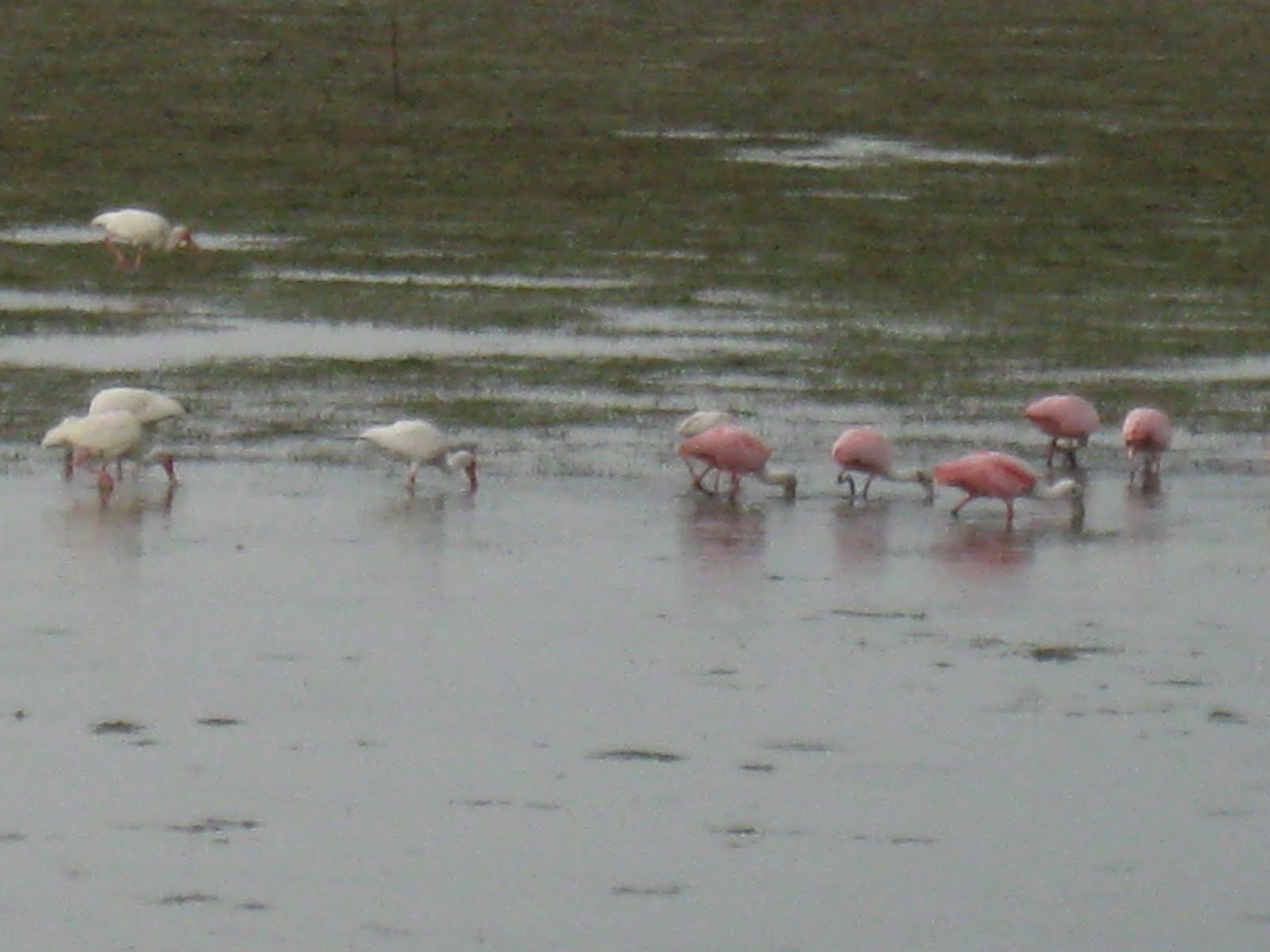

From the outer beaches to the interior sanctuaries, wildlife abounds on Sanibel. J.N. "Ding" Darling National Wildlife Refuge, named for Pulitzer Prize cartoonist and environmentalist Jay Norword Darling, is home to hundreds of birds, reptiles, and mammals. The four-mile drive provides spectacular up-close views of native vegetation and wildlife. One of the most popular activities during the leisurely drive is to stop and watch the roseate spoonbills with their bright pink feathers.

Going to and from the island is an experience in itself. The Sanibel Causeway, rebuilt in 2007, has a six-dollar toll and a million dollar panoramic view. The Causeway is approximately three miles long with three bridge spans and two man-made islands and is home to frequent dolphin, pelican and seagull sightings.

Friday, August 20, 2010

Fisherman's Village

Fisherman's Village is an eclectic waterfront complex. For the day tripper, a unique variety of boutiques, shops, restaurants, day spa and a military museum awaits. Vacation villas overlooking the harbor and a full service marina are also on site.

The boutiques offer everything from beachwear and Florida casual (tee shirts and flip flops) to resort wear. In the gift shops, you'll find an assortment of art, collectibles, bath and body, novelties, pet accessories, souvenirs, toys and water sport apparel and equipment. One of the most unique shops is Fuse Weld Grind owned by Joe and Mackie Clifton. Joe is a "recycle" artist who recycles old farming implements, garden tools, kitchen utensils, propane tanks, rebar and more to create unusual yet beautiful works of art, animal sculptures and bird baths, human sculptures, planters, wind chimes and more.

The restaurants vary from sandwich shops, to casual, open air and even fine dining. Several offer a great view of Charlotte Harbor and with the waterfront location, it is no surprise that seafood is the main draw at many of them. Near the entrance, the Military Heritage Museum has artifacts from the Spanish-American War up to the recent Iraqi conflict. Admission is free, but donations are welcome to enable this non profit organization to continue their mission of promoting the military heritage of the Unites States and the sacrifices of veterans. Their web site domain name says it all: "freedomisntfree.org."

Fisherman's Village is located one mile west of U.S. 41 on Marion Avenue in Punta Gorda, Florida.The boutiques and shops are open Monday through Saturday 10am - 6pm and Sunday 12pm - 5pm but restaurant hours vary.

Saturday, August 14, 2010

The Butterfly Estates

The Butterfly Estates is an eco-friendly botanical garden and butterfly conservatory located in the downtown Fort Myers River District.


The glass conservatory showcases an assortment of tropical flowers and plants that attract a variety of butterflies and small waterfalls that cascade down into fish-filled pools of water. Although small, it is a unique  interaction with nature best enjoyed in cooler weather.

Three historic homes from the early 1900s have also been renovated to reflect Old Florida charm as the Flutterby's Cafe, Mother Nature's Gift Shop and Caterpillars Ice Cream & Fudge Factory.

The Butterfly Estates is open 365 days a year with hours varying by season. Admission is priced by age with available discounts listed on their website.

Saturday, July 17, 2010

Octagon Wildlife Sanctuary

The Octagon Wildlife Sanctuary is a non profit retirement village for abused and neglected animals. The animals living at the Octagon were not taken out of the wild. They were rescued from businesses, circuses, individuals and even zoos. Many of them were confiscated by the Florida Fish and Wildlife Conservation Commission and/or USDA Federal officials and brought to the wildlife sanctuary where they get their "last chance" to live out their final days. 

If you're visiting or live in Southwest Florida and love animals, put the Octagon Wildlife Sanctuary on your list of places to visit. Bears, lions, tigers, and leopards are some of the more than 200 exotic animals you'll see and your admission fee will go towards the care of  these beautiful creatures.

The wildlife sanctuary, located off Highway 31 on Horseshoe Road in Charlotte County, is open to the public on Saturdays and Sundays from 11 a.m. until 4 p.m. However, guided tours or weekday visits require advance appointments by calling 239-543-1130. Admission is $10 for adults, $5 for seniors (55 and older)and children ages 8 to 17. Children under age 7 are free with a paying adult.

If you're unable to visit the wildlife sanctuary in person, please visit their website to learn more about the sanctuary and how to help with donations.

Monday, July 5, 2010

Marjorie Kinnan Rawlings Historic State Park

Marjorie Kinnan Rawlings Historic State Park is described in the state park brochure as an inspirational literary landmark. For a writer, it is indeed.

This famous author moved to Cross Creek in 1928 where she lived in her cracker style home for 25 years and wrote The Yearling, a Pulitzer prize novel. Both her house and farm yard have been restored to the original period and designated as a National Historic Landmark in 2007.  Additionally, the US Postal Service released a Rawlings commemorative stamp in 2008 and Florida's governor honored her as a First Floridian in March 2009. 

Visitors to her homestead are greeted at the barn by rangers,dressed in 1930s period clothes and knowledgeable about her stories and her farm life, for guided tours through the farmhouse from October through July.

 
 The farm yard is also maintained as it was in 1930s complete with chickens and ducks and a garden bearing seasonal flowers, fruits and vegetables while the citrus grove still yields its annual crop.

Two trails lead into surrounding woods where bald eagles, sand hill cranes and deer as well as smaller creatures make their home. The tenant house is tucked between the grove and woods and is a restored tenant house moved from the neighboring Brice family home. It resembles the original Rawlings tenant house where both black and white employees lived while they worked on her farm and in her grove.

History buffs, writers, as well as, nature lovers will truly appreciate this park.

Friday, June 25, 2010

Ravine Gardens State Park

Ravine Gardens State Park is located in Palatka where a ravine was formed by water flowing from the ridges of the St. Johns River over a period of thousands of years.

The gardens inside the park are the result of a joint effort of the City of Palatka, the Federal Works Progress Administration, and the Federal Civil Works Administration during the Great Depression. The park is one of nine New Deal-era state parks in Florida developed to help jump start economic recovery during the 1930s. Over 95,000 Azaleas were planted by 1934 and most of the original landscaping features - the main entrance, two suspension bridges, amphitheater, stoned terraces and columns, fountain and the Court of States - are still in place today.

The Ravine Loop, a convenient paved road that winds around the ravine, provides bicyclists and motorists with a view of both the formal and natural gardens throughout the park and gives access to hiking trails, parking, picnic areas and a playground.

The park is most spectacular and alive with color January through April when the Azaleas, Chickasaw Plums, Dogwoods and Camellias are in bloom, but the dense vegetation abounds year round.
 

Tuesday, June 15, 2010

Devil's Millhopper

Devil's Millhopper is an ancient sink hole located in Gainesville and is Florida's only geological state park.
 
The name came about because fossilized bones were found at the bottom of the funnel-like or grist-mill-hopper shape. Hence, the idea that the mill hopper fed the ancient bodies to the devil and the sinkhole became known as Devil's Millhopper. An Indian legend says the devil kidnapped a beautiful Indian princess. When the Indian braves followed them, the devil made the sinkhole for the braves to fall into and when they tried to climb out the devil turned them into stone. Although both tales are great stories, the sinkhole was actually  the result of a large underground cavern collapsing and is 500 feet across and 117 feet deep.

The water cascading down the limestone slopes sustains the dense vegetation and provides visitors with a glimpse of  times past. Descending 232 steps to the bottom, the different layers of sediment represent different periods of time. At the bottom of the sinkhole some of the water spilling out of the springs above travel down to a natural "drain" leading to the Gulf of Mexico.

This is a unique park that nature lovers will definitely enjoy, especially when the sinkhole is in its Springtime colorful splendor. Just remember that going up 232 steps is a lot harder than going down and take plenty of water when the temperature is above 80 degrees.


Tuesday, June 1, 2010

Edison & Ford Winter Estates

After a recent visit to the Edison and Ford Winter Estates, it is easy to understand why it is one of the most popular historic home sites in the country.

The first thing visitors see from the parking lot is a massive Banyan tree. Harvey Firestone gave this small tree to Thomas Edison in 1925 while they were working with Henry Ford to develop a source of natural rubber.

Behind the Banyan tree is the museum, gift shop, and botanic research laboratory. The museum holds some of Edison's inventions and Ford's automobiles, as well as, educational exhibits and videos. The lab is a step back in time and home to the original tools, equipment and machinery.

Across the street, lined with palm trees that Edison had brought in from Cuba, the estate homes, caretaker homes, gardens, swimming pool, pier, garages, and Edison's office have been restored to their original stature.

Edison's vacation home, "Seminole Lodge", was completed in 1886. He used the estate as a winter retreat while working on his botanic research until his death in 1931.

Henry Ford's vacation home, "The Mangoes", is located next door. Ford purchased it in 1916 and spent many winters there while also working with Edison on botanic research. 

Both residences take the visitor back to a bygone era with its sprawling porches and open-air buildings surrounded by acres of tropical greenery along the Caloosahatchee river.

The Edison Ford Winter Estates offers something for both the history buff and the nature lover.


Thursday, May 13, 2010

The Shell Factory

The Shell Factory, located off US 41 in North Fort Myers, is over 70 years old and a testament to perseverance. Despite being damaged by Hurricane Donna in 1960, nearly destroyed by a fire in 1980, ignored after the completion of I-75 detoured traffic away from US 41 in the mid 1980s, and in the clutches of bankruptcy in 1997, it remains as a historic tourist attraction thanks to Tom Cronin, a local businessman, who looked to preserve a piece of Florida history by saving the Shell Factory and improving upon its original stature.

The Shell Factory has always been a mega attraction for its massive collection of seashells, as well as, for its many shops of jewelry, Florida Style casual wear, Christmas items, collectibles, shell craft items and souvenirs. However, multimillion dollar renovations have added to the family entertainment experience with bumper boats, miniature golf and a nature park consisting of hundreds of animals, a petting zoo and a 7,000 square foot aviary with tropical landscaping and colorful birds.The renovations have also brought back some of the Shell Factory’s original flavor with a Florida souvenir and sweet shop, an old-fashioned fudge shop and an ice cream shop.

A steak and seafood restaurant, an outdoor bar, a post office, a Subway eatery, as well as, the largest free private Natural History Exhibit have also found a home at the Shell Factory. The Shell Factory remains in a constant flux of change while giving respect to the past, celebrating the present and looking to future.

The Shell Factory is open seven days a week where their motto is “At the Shell Factory we guarantee a warm welcome, magic moments and a fond farewell.”

Monday, May 10, 2010

Gatorama

Gatorama, located on US 27 between Palmdale and Moore Haven, is one of Florida's original roadside attractions still operating today. Even more amazing is the fact that it is still operated by the same family of native Floridians into the fifth and six generation.

This 15-acre attraction makes its home in a natural hammock with a covered 1,000 foot walkway and a lengthy wooden bridge. The walkway meanders past baby alligators, bobcats, ducks, geese, panthers, raccoons and peacocks while the wooden bridge brings visitors up close to the many alligators and crocodiles. Gatorama is open daily, except for Thanksgiving and Christmas.